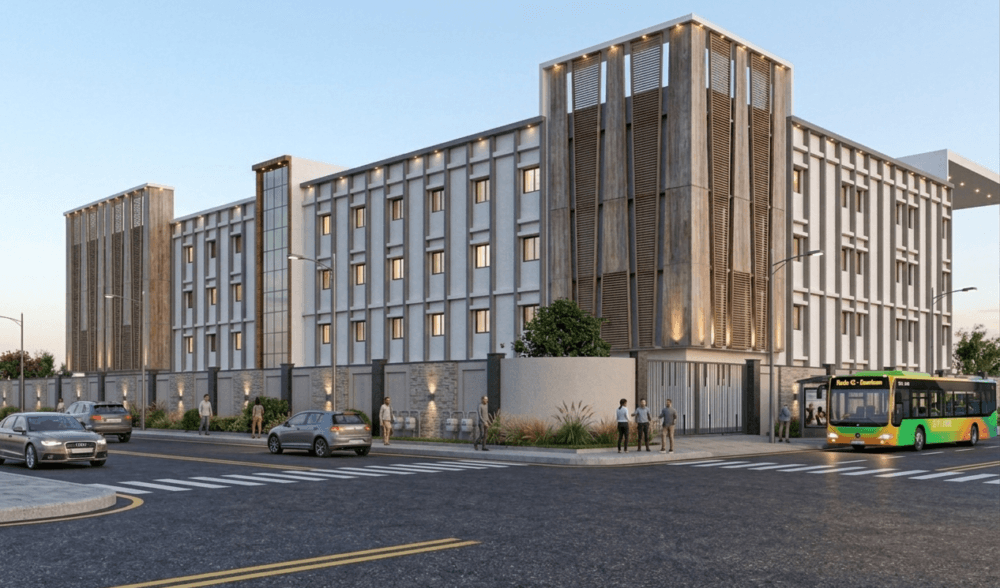
In today’s fast-evolving design and construction industry, Artificial Intelligence (AI) is redefining the way architectural and interior spaces are conceived, visualized, and delivered. From smart planning to ultra-realistic visualization, AI is helping architecture firms create faster, smarter, and more sustainable solutions for clients.
At our practice, we see AI not as a replacement for design expertise, but as a powerful tool that enhances creativity, precision, and project efficiency.
Smarter Design Development
AI-driven design tools allow architects and interior designers to explore multiple planning options in a fraction of the time required by traditional methods. By analyzing project requirements such as site dimensions, orientation, circulation, functionality, and user preferences, AI can generate optimized layout concepts quickly.
This helps clients visualize multiple possibilities during the concept stage and enables faster decision-making.
Key benefits include:
- Faster concept development
- Better space optimization
- Improved natural light and ventilation planning
- Reduced design revision cycles
- More efficient use of materials
Realistic Visualization and Rendered Views
One of the most impactful uses of AI in architecture is advanced rendering and visualization.
AI-powered rendering workflows can transform conceptual sketches, CAD elevations, façade studies, and interior layouts into realistic presentation views with accurate materials, lighting, shadows, textures, and landscaping.
This allows clients to see how the final project will look before construction begins.
Whether it is:
- residential elevations
- office buildings
- school campuses
- industrial sheds
- interior design concepts
AI-based visualization significantly improves presentation quality and client confidence.
Better Material and Façade Exploration
AI tools make it easier to test multiple façade finishes, color palettes, textures, cladding materials, wallpapers, lighting moods, and furniture combinations.
This is especially useful in interior and architectural design projects where material selection plays a major role in the final aesthetic.
Clients can compare multiple design options quickly without changing the base geometry of the project.
Sustainable and Performance-Based Design
Modern architecture increasingly focuses on sustainability.
AI helps analyze sunlight, wind direction, energy consumption, and thermal performance to support more sustainable building decisions. This enables better orientation, shading strategies, and façade treatments for improved building performance.
The result is:
- lower energy costs
- improved user comfort
- sustainable material choices
- environmentally responsive design
Improved Project Coordination
AI is also improving coordination between architecture, structure, MEP, and execution teams.
By identifying design clashes and workflow bottlenecks early, projects can move more smoothly from design to construction.
This reduces delays, cost overruns, and site-level issues.
The Future of Architecture with AI
The future of architecture lies in the balance between design vision and intelligent technology.
Human creativity, contextual understanding, and aesthetic judgment remain at the heart of architecture, while AI strengthens speed, analysis, and visualization.
For clients, this means better designs, clearer presentations, faster revisions, and more confidence in the final outcome.
AI is not just changing architecture—it is elevating the way spaces are imagined and built.